A visit to Liverpool's School of Tropical Medicine
A couple of weeks ago I received a phone call from the producer of the BBC’s One Show wildlife programme asking if I’d like to appear on a show they were doing on leishmaniasis. I was keen as I have always wanted to raise awareness of the disease and the programme—being by the BBC’s Natural History Unit, presented by an eminent wildlife expert and academic rather than Ben Fogle—would have some scientific weight to it.
Filming took place this week at Liverpool’s School of Tropical Medicine. I headed down today to meet George McGavin—the presenter who is an author, lecturer, explorer and notable academic who advised on David Attenborough’s Life in the Undergrowth—and the producer and her crew. I was asked to simply talk about the progress of my symptoms, diagnosis and treatment. This is something I’ve done a million times before, however, never to an inanimate object that is relaying it on. If you lose your trail of thought with a camera, you can’t just carry on.
So after a few takes, the couple of minutes of film was wrapped up and I headed up to meet Rod Dillon, a scientist researching the sandflies’ interaction with the Leishmania parasite, with an objective of developing new control systems for leishmaniasis. Dillon had kindly invited me to have a look around his labs and show me the work he and his team undertook.
Having suffered the disease and read up on it to a vaguely low academic level, seeing and being told about the progress being made in labs was hugely rewarding. Much of what I had heard and read appeared to show that work on the disease was stagnant, and indeed it seems to be in most of the country, however, here these academics were devoting a chunk—if not all—of their careers to it.
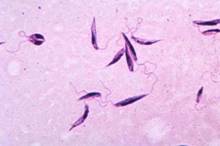
Dillon pointed me towards a collection of sandflies and then showed me, under a powerful microscope, the protozoa wriggling around—some of many housed in bottles in the labs for research. He explained the work he and his team were doing: working on the relationship between the sandfly and the Leishmania itself.
What struck me was the importance of the team’s work. Dillon later talked about another disease often found in Peru, Bartonella. Very little research has been done on this and the scientist was keen to get some going. However, funding was his barrier, and the barrier to much of his work. If it wasn’t for charities such as the Wellcome Trust, his department would not be able to function, he said. It received no government funding.
I then had a drink with Dillon and his team. We talked science and journalism with an idealistic bent. We talked football as one Mexican member was somewhat hungover after his team’s 2-0 win against France in last night’s World Cup game.
I left with a sense of closure about my suffering of the disease. I had been through months of misdiagnosis, tentative diagnosis, treatment, healing and had just seen the science behind much of that process.
However, I received no closure in terms of the future of this important research. I cannot begin to understand why such an important—important for so many people around the world who will live or die depending on the team’s success—scientific process is not adequately funded.
I wish Dillon and those involved in scientific research the best of luck and encouragement that their work is part of humanity’s most important endeavour.